

Cassandra Syndrome
What it's like to live in a civilization you know is heading toward extinction
The Trojan War from Greek mythology spawned countless legendary figures. One could say that it all began with the birth of King Priam of Troy’s second son with his wife Hecabe, Paris. The king received a prophecy upon Paris’s birth that the child would one day cause the downfall of Troy and, upon hearing it, abandoned the wain in the wilderness to perish from exposure.
As all myths, the details change in every recounting. Some say that baby Paris was saved by a mother bear that fed him her milk for several days. Others say he was found by a poor rural family. In any case, he ended up a shepherd in Mount Ida unaware of his own blue blood.
Then, one day, as three goddesses competed to decide which one was most beautiful, Paris got swept up in the fray and upon certain successes, promised the hand of the most beautiful woman in the world: Helen. You most likely know her as Helen of Troy, and if you do, you know where this story is going.

Somewhere along the way, it is revealed that Paris is, in fact, a prince of Troy, he abducts Helen and sparks a war between the ancient Greeks and the Trojans. During the war, we meet such heroes as Hector and Achilles, and after the war, Odysseus departs on a journey home so strenuous that we still use the word odyssey today to signify a lengthy and eventful trip.
These events are recorded in the epic poems of Homer, the Iliad and the Odyssey, which are among the oldest known pieces of literature in the world. Despite the many compelling characters contained within these works, we are skipping over the gods and demigods and heroes today. Today, we’re focusing on a princess of Troy who received both a blessing and a curse from sun god Apollo.
Cassandra is just one amongst Kind Priam’s alleged dozens of children, yet her storyline has pervaded the imagination of many through the centuries. She was born as a twin to Helenus, who would later come to be their father’s favorite child and also received the gift of prophecy. One version of the story says that as infants they were forgotten overnight at a temple of Apollo and found in the morning with serpents licking their ears.
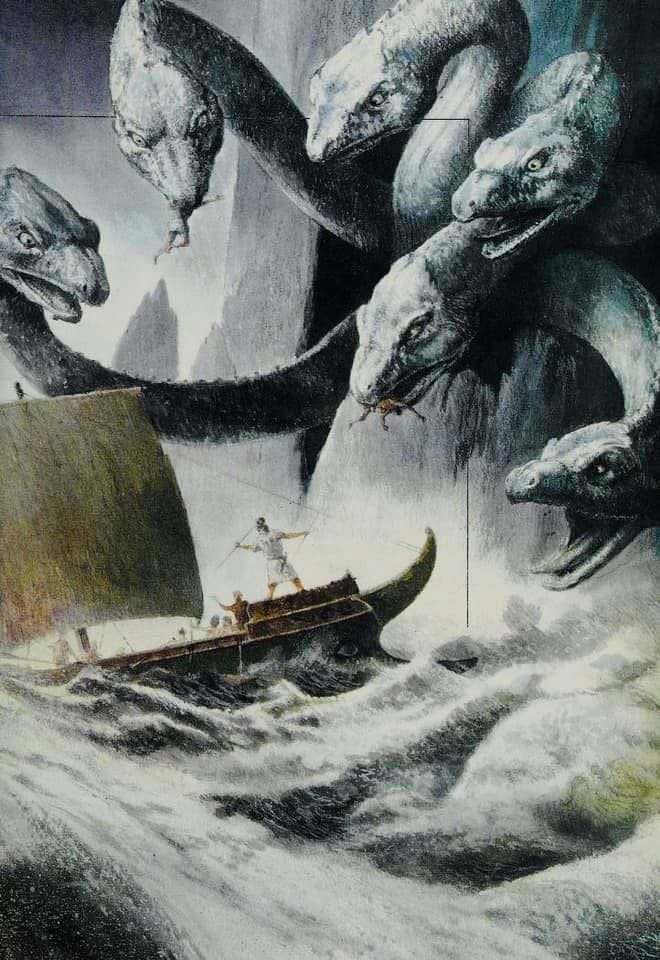
Because of the sun god’s association with precognition, this is one explanation for why the twins had prophetic abilities. Another version places Cassandra at Apollo’s temple as a priestess. There, she catches the sun god’s eye, and Apollo blesses her with the gift as a way of ingratiating himself to her. Despite the variety of interpretations about how Cassandra received her blessing, everyone seems to agree that she was subsequently cursed after rejecting Apollo’s advances.
What was her curse, you ask? It was for her prophecies to never be believed. There’s some debate as to what this means exactly. After all, it’d be difficult to witness both her predictions and the events she foretold coming to pass and continue doubting Cassandra. But, of course, curses don’t operate on what we consider logic.
One theory is that people around Cassandra were cursed to forget the accuracy of her prior prophecies and continue thinking her a madwoman. Another is more relevant to global events today, and that’s that people simply chose not to believe the predictions that they didn’t like or agree with. Imagine being a citizen of Troy at the time in which Cassandra was claiming that their downfall was on the horizon. Does that not remind you of anything?

A contemporary Cassandra
There is an entire genre of fiction based on the modern retellings of age-old stories like Cassandra’s. The reason it’s so successful is because by employing familiar characters and plot points, readers can more easily relate to the narrative. However, adding a twist or looking at the well-known story from a different angle (Cinderella from the ugly stepsister’s point of view, for example) can result in something that still manages to surprise fans of the original tale.
Modern retellings are also a great way to address issues we grapple with today that might not have been top of mind at the time of the original’s creation. Think racial and gender equality, LGBT rights, etc. You might see where I’m going with this. When it comes to the climate crisis, biodiversity loss, and the dwindling of the natural resources we need to survive, there’s few classic tales more relevant than our dear Cassandra’s.
