

Universal wealth and opulence
What social responsibility do companies hold? Economists like Friedman misinterpreted Adam Smith's work to argue that imposing such a thing on companies would topple the free world
Adam Smith is widely regarded as the father of modern economics because of his seminal work, The Wealth of Nations. In this book, Smith posited a theory that underpinned how businesses and other private actors behave in a market economy, i.e. one where people can act freely without government control. Nowadays, this is what Smith is known for, but scholars of his work believe that the man himself would have preferred otherwise.
Smith wasn’t an economist, at all, but a philosopher. He prized his first book, The Theory of Moral Sentiments, far above The Wealth of Nations. While there’s wide debate about how these two works fit together and some see them as contradictory, it’s possible that Smith was describing different aspects of human nature. A third unfinished work on justice would have rounded his oeuvre out.
In The Theory of Moral Sentiments, Smith describes how humans come to form moral judgements and theorizes on the practical purpose of sympathy. Then, in The Wealth of Nations, he focuses on what he calls commercial society and posits that while each individual may be laboring for their own profit in the market, they are unintentionally benefitting the public good at the same time.
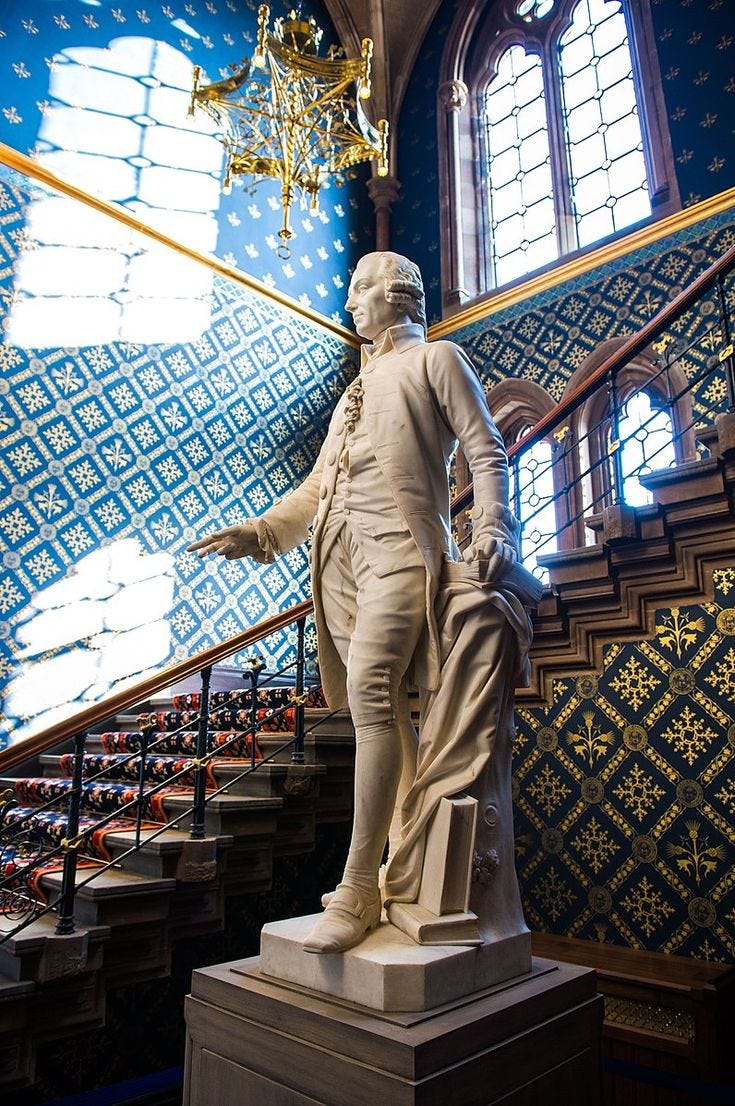
Despite terms like the invisible hand and capital as we know it today having originated from Smith’s second work, he was far from the libertarian some proponents of unfettered capitalism make him out to be. In fact, Smith was very preoccupied with ensuring that the economic system create shared value that was distributed to even the lowest ranks of society.
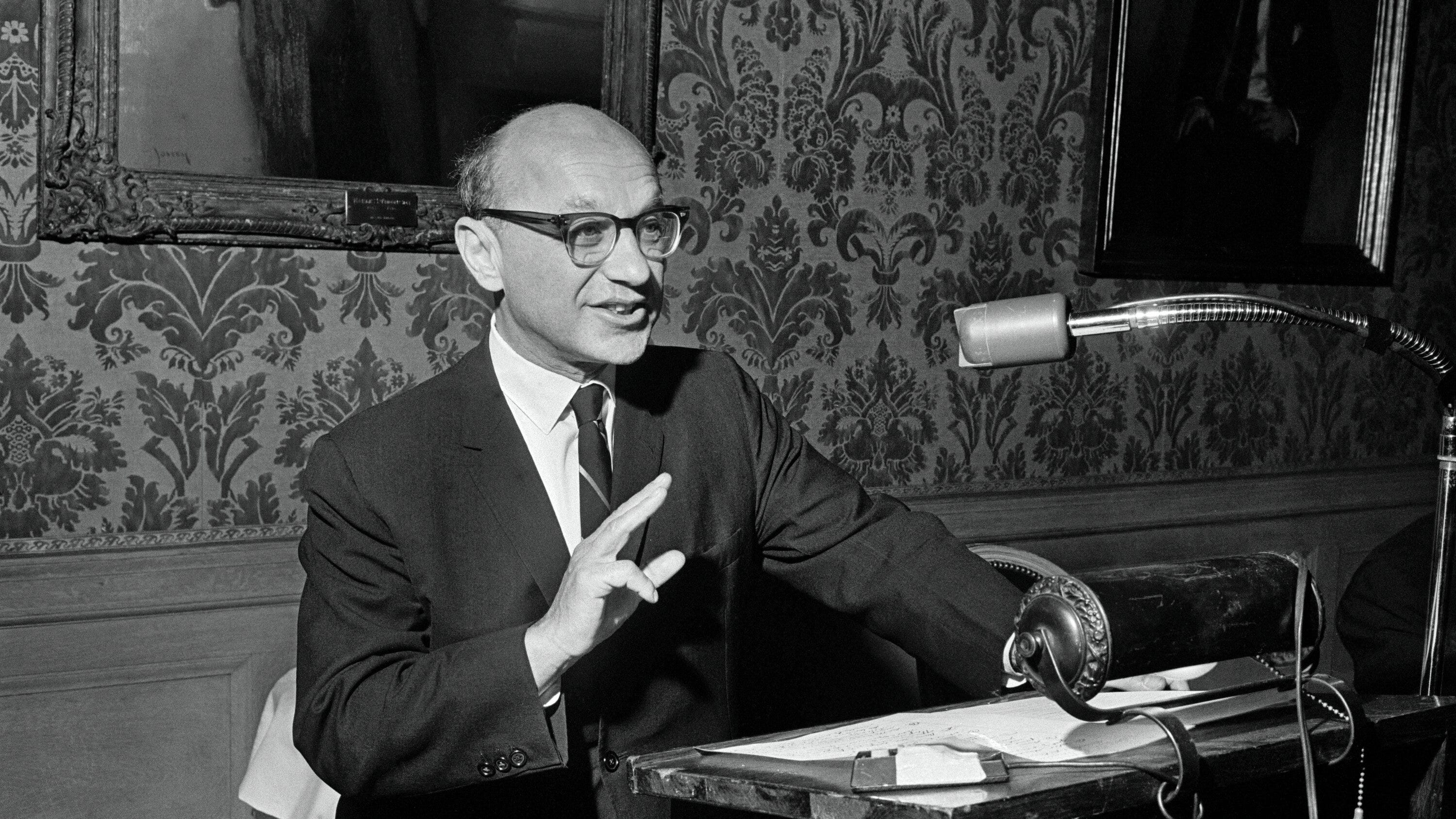
As such, one can only assume that Smith would look poorly on our current hyper-capitalist system in which the top 1% are hoarding 36% of the total wealth and efforts to fight extreme poverty have stalled. Yet, his philosophies have been used as bedrocks for theories like those of Milton Friedman, winner of the Nobel prize in economics of 1976 and champion of market deregulation.
While there’s no doubt of Friedman’s brilliant achievements in some aspects of economics, his public influence allowed him to leave such a mark on politics that his theories are still relied on my policymakers today. The problem? That Friedman took Smith’s idea of the invisible hand that balances the economy without governmental intervention to such an extreme that he even blamed the provision of public schooling, minimum wage laws, drug prohibition, and welfare programs for unintentionally forcing inner-city families into cycles of crime and poverty.
To Friedman, any government intervention was undesirable. He believed, like Smith, that by increasing production and leaving economic actors unsupervised, they would naturally create value for the entire society. In some ways, it’s a form of trickle-down economics, a debunked theory that justified tax cuts for the wealthy or other policies that helped the rich accumulate more wealth under the pretense that the money would somehow trickle down to the middle and lower classes.
Now we know that trickle-down economics doesn’t work. But Friedman’s brand of free market economics still has a hold on business and political leaders today, sometimes to the detriment of the common good. For example, a phrase from one of Friedman’s most famous articles published in the New York Times in 1970 has been used to justify corporations’ relentless destruction of the environment and exploitation of vulnerable peoples in the pursuit of profit.
I’m referring to, of course, Friedman’s doctrine that the social responsibility of business is to increase its profits and create value for their shareholders. In his article, Friedman specifically denounces anyone who claims that businesses should pursue desirable social ends like employment generation, preventing discrimination, and avoiding pollution as socialist puppets undermining the basis of a free society. And that’s only in paragraph one!
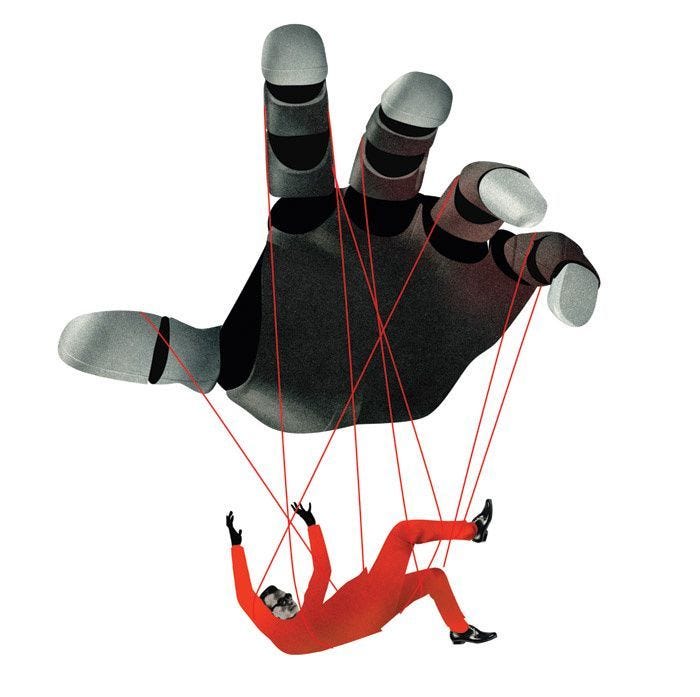
I could go line by line responding to this particular piece, but I’ll spare you. To summarize, Friedman claims that it’s not the place of corporations to act according to common goods like protecting the environment or fighting poverty because they’re using shareholder or customer money to take arbitrary actions. He correctly points out that by speaking about social responsibility, businessmen are admitting that the undiscerning pursuit of profit is immoral and must be regulated with price and wage controls.
To Friedman, however, these regulations and controls were enemies of what he called a free society. And for corporate leaders to advocate for corporate social responsibility was suicidal. Friedman could not conceive of a prosperous economic system in which actors were required to consider the public good in their business decisions. However, that’s because Friedman lacked imagination.
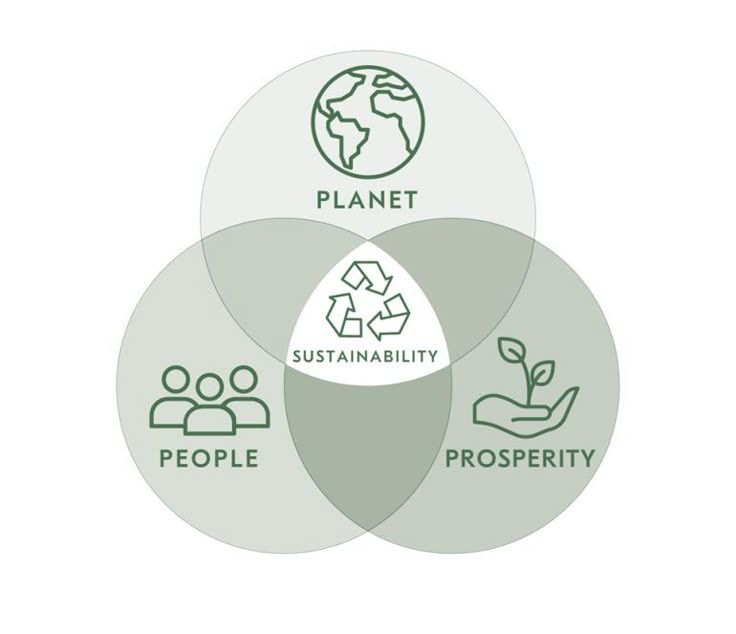
The fact that most companies nowadays have environmental or social initiatives proves that we’ve moved past Friedman’s greed-is-good model. However, sustainable development advocates want to take this commitment to corporate social responsibility one step further. Instead of minding only their bottom line (profit), advocates say that companies must seek to benefit a triple bottom line: profit, people, and the planet.
Companies do this to different degrees. On one end of the spectrum, we have extractive industries like fossil fuels, which create more negative impacts than positive but will undoubtedly have implemented ESG initiatives. On the other end, we have NGOs that operate not for profit but solely for environmental or social impact. But there’s a lot in between, for example, social entrepreneurs and impact investors.
These two categories sit closer to the NGO-side of the spectrum because they value positive impact as much as they value profit. In fact, in many cases, those leading these ventures see profit generation as a way to stay financially viable and keep generating more positive impact. Impact investing specifically is when an investment is made with the intention of generating social or environmental impact along with a financial return. The fact that there is a financial return expected sets it apart from charitable donations.
What are they investing in? Not unlike traditional investors, they’re choosing start-ups or more established companies that want more funds to scale their businesses. Except that in addition to analyzing financials to see if their investment target is financially viable, they’re also analyzing whether their activities will contribute to things like the transition to renewables or economic development in low-income areas.

For the ones purely focused on environmental impact, their portfolio can include companies that install household solar. For those that are also looking for social impact, they might prefer a company installing household solar in Sub-Saharan Africa where the customers served may not have access to the energy grid or where blackouts and brownouts are frequent. While the impact is indirect, a social impact assessment methodology could be created to prove that by providing more a stable energy supply, the company is contributing to poverty alleviation efforts and other social ends.
Most importantly, the data has shown that impact investments are competitive with traditional investments and even outperform them at times. This proves that pursuing the triple bottom line is economically viable contrary to Friedman’s predictions. All it takes is creative thinking and innovation. This leads us to the concepts of social innovation and social entrepreneurship.
Social innovation is just what its name implies: the process of inventing and implementing novel solutions to social needs and problems. And when a social innovation can be monetized and turned into a business, that’s social entrepreneurship. It can be as simple as a coffee shop that employs differently abled people or refugees. Or as complex as what won Muhammad Yunus and Grameen Bank the Nobel Peace prize in 2006: microfinance.
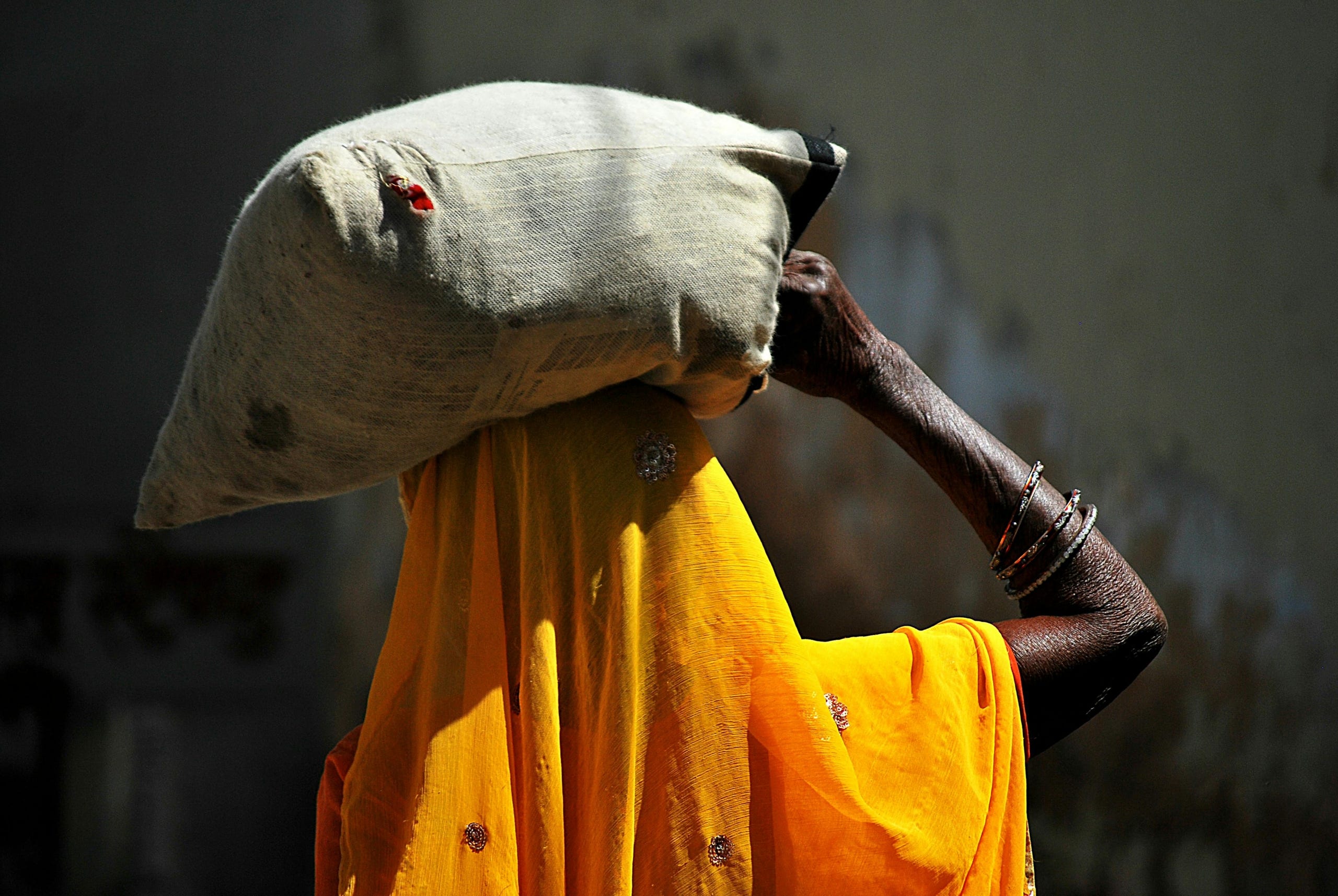
Microfinance allows loans, insurance, and other financial services to reach those who don’t have access to the conventional financial system, i.e. those living in poverty. It combats the cycle of poverty many of them might be trapped in and gives them the resources to escape. Microfinance instruments are now being provided by scores of institutions all around the world.
Social entrepreneurship presents a powerful alternative model for non-profit organizations that have historically relied on donations to keep generating positive impact. A successful social enterprise generates employment, upskills employees, and contributes to the economic development of the region all while being self-sufficient. This gives the community more independence and autonomy than when they solely rely on charitable acts.
The success of social enterprises and B Corps has proven time and time again that businesses don’t have to sacrifice profitability to have a positive impact on society and the planet. Despite the anti-DEI and anti-ESG push in the U.S, you’d be hard pressed to find a large company in the world that doesn’t have environmental or social initiatives, even if by another name. This represents a fundamental shift from generating shareholder value to stakeholder value.
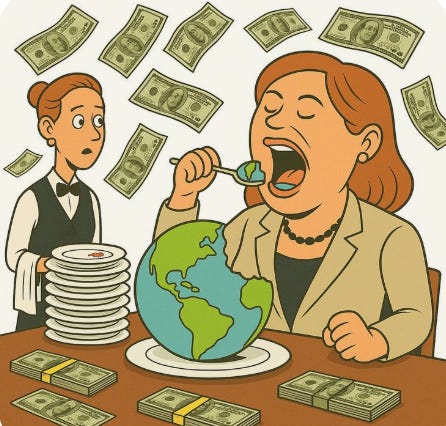
A company’s stakeholders include their shareholders, but they also include their employees, customers, and the society in which they operate. Consumer expectations have changed, and companies that fail to demonstrate social and environmental responsibility risk losing their social license to operate. That is, the community’s implicit agreement that the company has a right to exist and operate within it.
In some ways, the triple bottom line model is an extension of the idea of stakeholder capitalism that includes our ecosystems and biodiversity in the list of stakeholders. By adopting it, companies can create long-term value for every person in the society, just like Adam Smith meant when he wrote about universal wealth or opulence. This might introduce new restrictions on how companies can exploit natural resources or labor, but restrictions are a powerful way to encourage creativity and innovation.
What Friedman ignored when arguing that corporations need only create value for their shareholders is that shareholders are also part of society and the planet. Can a company that generates profits and dividends while destroying the world that those very same shareholders live in be said to be generating value for them?
We see more of the rich getting richer and the poor getting poorer right now and CEOs making millions while workers live paycheck to paycheck. It’s sad. Excellent article, Meghan!