

Cities of the future
Are urban centers or rural areas more sustainable? The answer might not be as straightforward as you think
In 2007, the number of people living in urban centers caught up to those living in rural areas for the first time in human history. Since then, the rates of urbanization have only increased. Today, just about 57% of the global population lives in cities. By 2050, the UN estimates that to 7 out of 10 people will.
Urban centers often produce the bulk of country’s economic output. In the U.S, the figure is over 90%. That’s why people flock to them in search of higher wages, better educational opportunities, and class mobility. However, despite having generally better infrastructure than rural areas, cities can easily become overcrowded, leading to housing shortages, high rates of inequality, and the creation of slums.
Despite those risks, people seek out urban living for different reasons. Younger generations might move in search of culture and global connectivity. With the rise in extreme weather events, climate-related displacement is also driving surges of migration from rural areas to urban ones. And as these converging movements depopulate rural areas, it can impact the quality of life and opportunities available for those remaining and reinforce migratory trends.
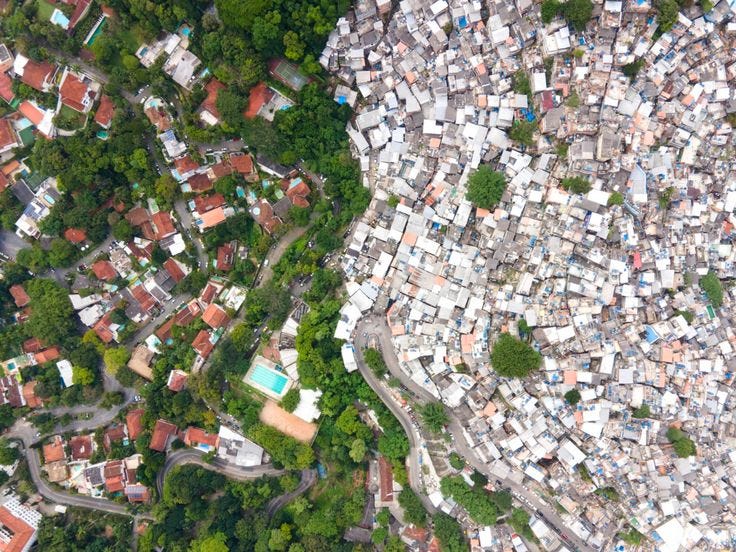
Given the rates of urbanization over the recent decades, it’s no surprise that resource and energy consumption has spiked in cities. “They account for more than 75% of all natural resource consumption, produce around 70% of the world’s CO2 emissions and generate 50% of all global waste.” James Horrox writes for Frontier Group.
Cities often have higher levels of air pollution, and their heavy use of concrete and asphalt doesn’t only prevent rainwater infiltration, increasing flooding and runoff carrying pollutants to nearby waterways, but also creates a heat island effect where temperatures rise significantly compared to surrounding areas. Their construction contributes to soil degradation, light pollution, and even changes in precipitation patterns.
Given all these factors, when a question like is city living more sustainable than country life arises, your first instinct might be that it’s not. But, in fact, the answer is not so straight-forward. Today, I examine the environmental benefits and drawbacks of rural areas, urban areas, and the suburbs that often delineate the limits between them. Then, I ask if these delineations actually serve to further sustainable development and ecological regeneration or not.
Country life
When asked to picture an environmentally friendly lifestyle, many would imagine it to be out in the country. People in rural areas live closer to nature, have more hands-on experience with environmental issues, and interact more often with the natural world. With more space available, they can grow their own food or harvest wild ones. And in the absence of a restrictive homeowner association, they could have more freedom to install solar panels or even design their home in a more sustainable manner.
While aesthetic movements like cottagecore might have romanticized this as the path to sustainability, true self-sufficiency is difficult to achieve. Most rural residents rely on long supply chains to purchase groceries, household goods, and other necessities. And fossil fuel consumption increases when these essentials require long-distance transportation.
Although the abundance of space might lead to some positives, it also encourages the construction of larger properties than those seen in cities and forces a reliance on cars to traverse longer distances. Some people might find the big country houses more desirable than high rises, but they consume more energy for heating and cooling.

That’s not to say that country living is inherently unsustainable, but it is certainly less efficient that densely packed cities. This can be seen especially in the provision of public services like waste disposal and sewage treatment.
City living
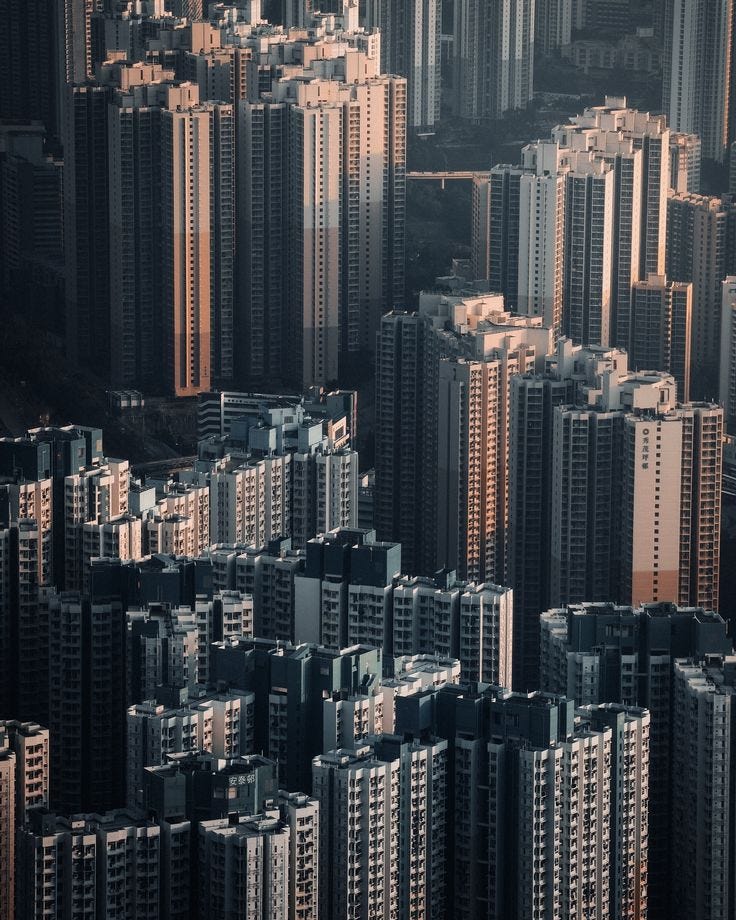
In contrast to the country, urban centers are characterized by their high population density. It’s this high-density living that provides an opportunity for lower per capita energy consumption and less land use. Multi-family buildings house larger populations using a fraction of the space and energy required for single-family homes. Shared walls reduced heat loss in the winter and cooling needs in the summer.
Concentrating the population in relatively small areas allows for more undeveloped natural areas outside the city. By leaving more space for agricultural land, as well, it eases the pressure to overexploit the land or use chemical fertilizers to increase crop yields. Not only are things closer together in cities, mixed-use development means that residential areas are often right by commercial establishments. Because of that, walking and biking are more accessible modes of transportation.
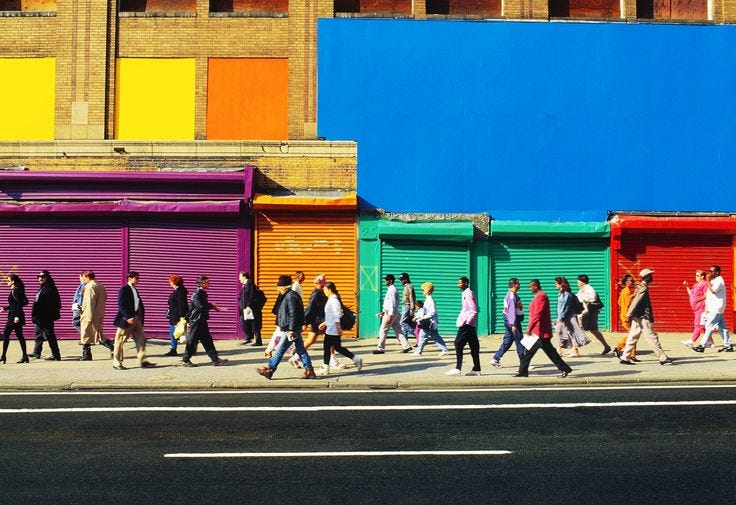
Public services such as public transportation, sewage treatment, and waste disposal are also more efficient in cities. Even water quality tends to be better when connected to a municipal water source that is routinely tested. In rural areas, on the other hand, people still rely on well water, which can be contaminated by chemical runoff from nearby agricultural activities.
Larger-scale recycling programs, composting initiatives and waste-to-energy plants are more likely to succeed in places with high population density. So are innovations like car-sharing services and co-working spaces which allow people to share resources, or rooftop gardens and vertical farming which can supplement cities’ food supply with local sources.
Effective governance and planning is essential to unlocking the potential environmental benefits of urban development and ensuring equitable access for all residents. However, seeing as how urban areas occupy only 3% of the planet’s surface and house over half of the population, they’re an essential piece in the sustainability puzzle.
The ‘burbs
Rural and urban environments both have their pros and cons when it comes to sustainable development, but what about the suburbs? Most urban centers are separated from the country by a band of suburban sprawl. This expansion reduces natural habitats and forces agriculture to intensify on the remaining available land. Not only that, suburban homes tend to be much larger than city dwellings and much less efficient in terms of energy use.
Suburban environments emerged during the 19th century when the use of automobiles became more common to travel between rural and urban areas. It’s no surprise that they remain car-centric considering that. The combination of these factors means that life in the suburbs is more carbon intensive than both rural and urban environments.
However, many measures can be taken to lower this footprint. Switching to an electric car or even an electric bike would be a good place to start, although the impact depends on the power mix of the grid that provides electricity to charge them. There’s also usually some forms of public transport available, although they tend to be less efficient that in cities.
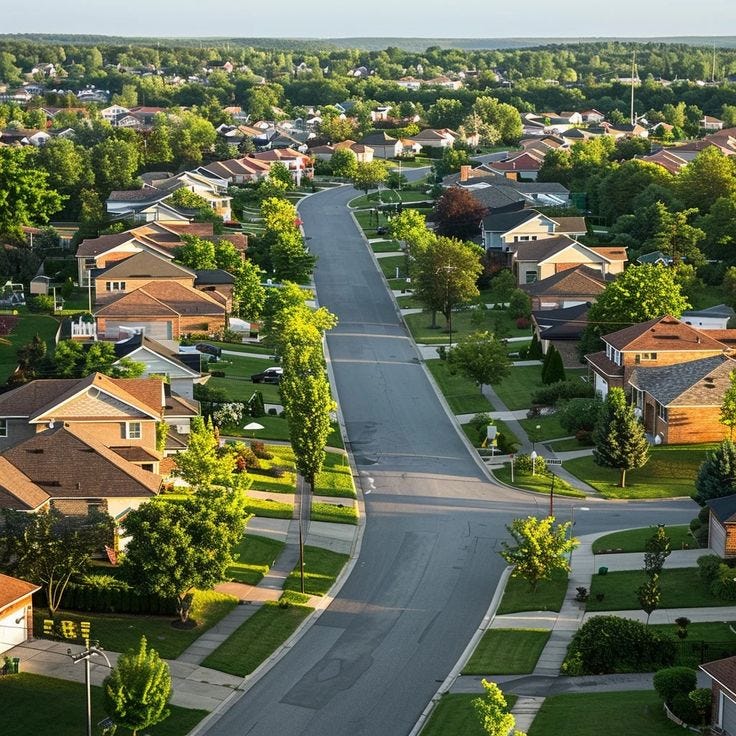
As it’s done now, urban expansion isolates and fragments natural habitats. This impacts species that require larger territories to thrive and can limit genetic diversity by restricting the movement of wildlife. This impairs ecosystems’ ability to adapt to environmental change. But these areas could actually provide opportunities for ecological connectivity.
Instead of perfectly manicured lawns, chemically fertilized gardens, and golf courses that serve as biodiversity dead zones and become barriers between cities and the country, suburbia could become a conduit for nature.
Let’s explore how.
Dissolving the urban-rural divide
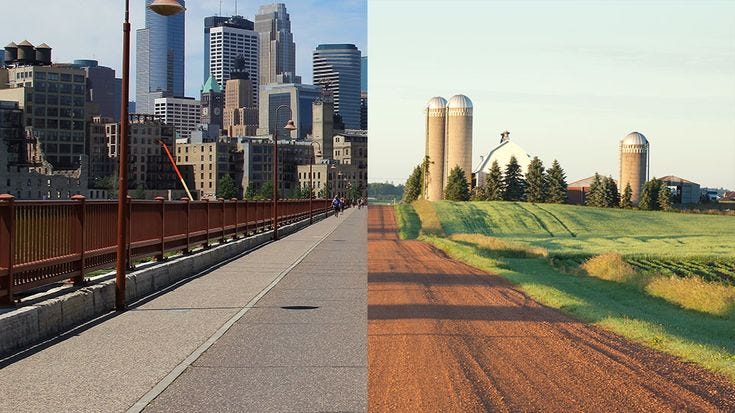
Rural life may allow more flexibility to make choices that minimize residents’ environmental footprint, and strategic urban planning can make city living more resource efficient than rural lifestyles. But the contextualization of these environments as mutually exclusive creates a much too simplistic binary and impedes us from realizing true sustainable development.
Take, for example, a freshly built metropolis in the middle of the desert like the one billionaire Marc Lore, former President and CEO of Walmart said he wanted to build in 2021. No matter how efficient this city’s water use and green its energy, if there’s a failure to consider ecological continuity between the city and its surroundings, the fragile ecosystem will suffer. Rather than build something that displaces or interrupts the landscape, we must find ways to integrate nature in the next generation of sustainable infrastructure.
Urbanization is usually seen as an irreversible process, but it’s possible to transition some urban spaces back into natural ones. Urban forests, green roofs, and urban agriculture can increase biodiversity, improve air and water quality, and combat extreme heat. In some places, residents are even de-paving their sidewalks and roads to recover interrupted ecosystem services. The goal of these initiatives is to ensure that cities can withstand the impacts of climate change and remain livable.
The key is seeing cities not as self-contained, but as porous and in a broader relationship with their surrounding environment. Nature isn’t an external element to be inserted, as it sometimes is in biophilic architecture, but a set of ecological cycles and processes that must be allowed to continue. Planning and governance must take into account things like hydrological flows and species migration for this to succeed. Otherwise, urban green spaces could remain superficial and tokenistic, “preserving the appearance of connection while concealing the reality of separation.”
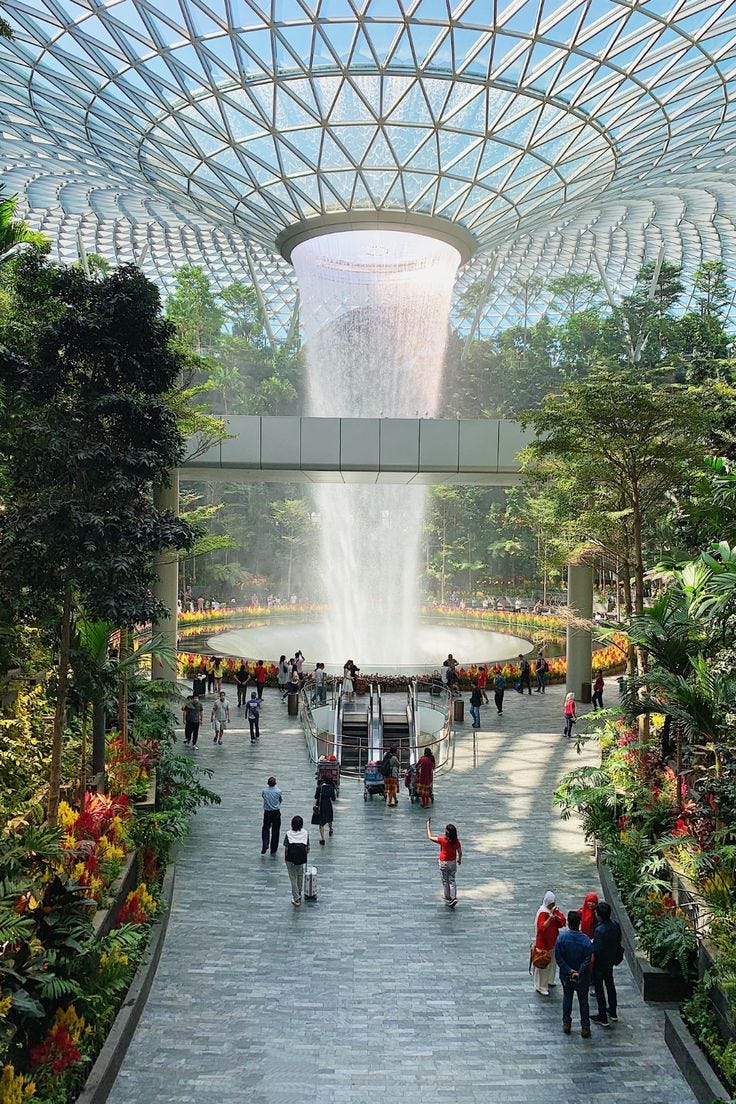
The successful implementation of this idea would not result in high-tech natural spaces that require intensive watering to stay alive. A great example is the neighborhood of Fælledby in the outskirts of Copenhagen, which will be built entirely of timber and include 40% undeveloped habitat for flora and fauna. Green corridors will connect its communities with native plants so wildlife can move freely. Façades will include birdhouses, wetlands will provide habitat for aquatic life, and community gardens will attract pollinators.
Fælledby will house thousands of residents and provide all the amenities needed while enabling ecological connections between the city and its surroundings, a connection that these types of suburbs tend to sever.
Conclusion
The city is often defined in opposition to the countryside, as the place where resources produced in the country flow and are consumed. Nature is thought of as being exclusively within the domain of the rural, which has limited the opportunity for urban development that maintains a connection with the natural world.
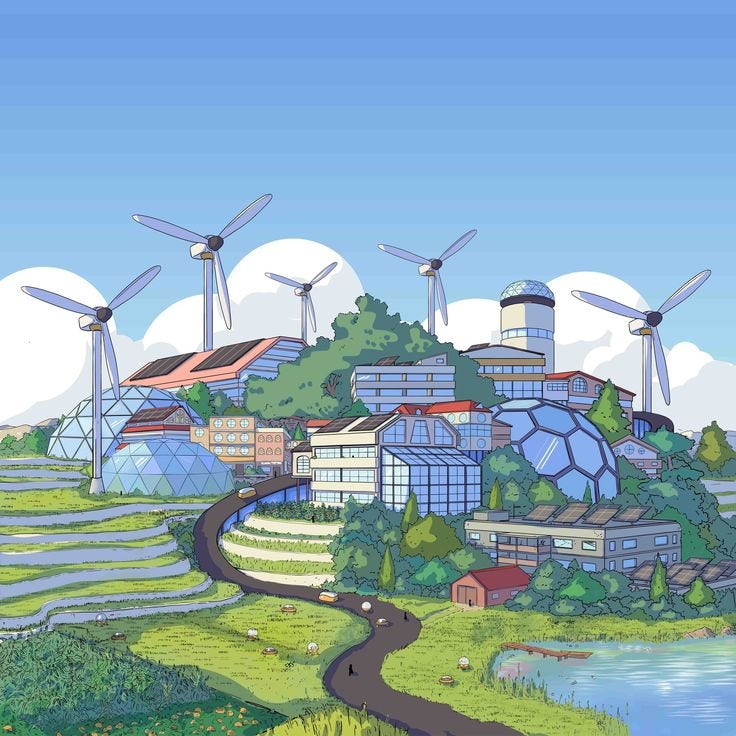
As urbanization continues, efforts must be made to make the cities of the future places were biodiversity thrives. But we must reimagine what a city is and who it serves to achieve this, decentering humans and incorporating ecological flows in our urban planning. This will make cities more resilient as natural spaces provide essential services like water absorption and soil stabilization.
This must happen in tandem with other policies investing in sustainable infrastructure like public transportation and walkable communities. In cities, old buildings can be upgraded and repurposed to meet new needs instead of starting new developments. Population density should be embraced to continue lowering per capita resource consumption and prevent further land-use conversion.
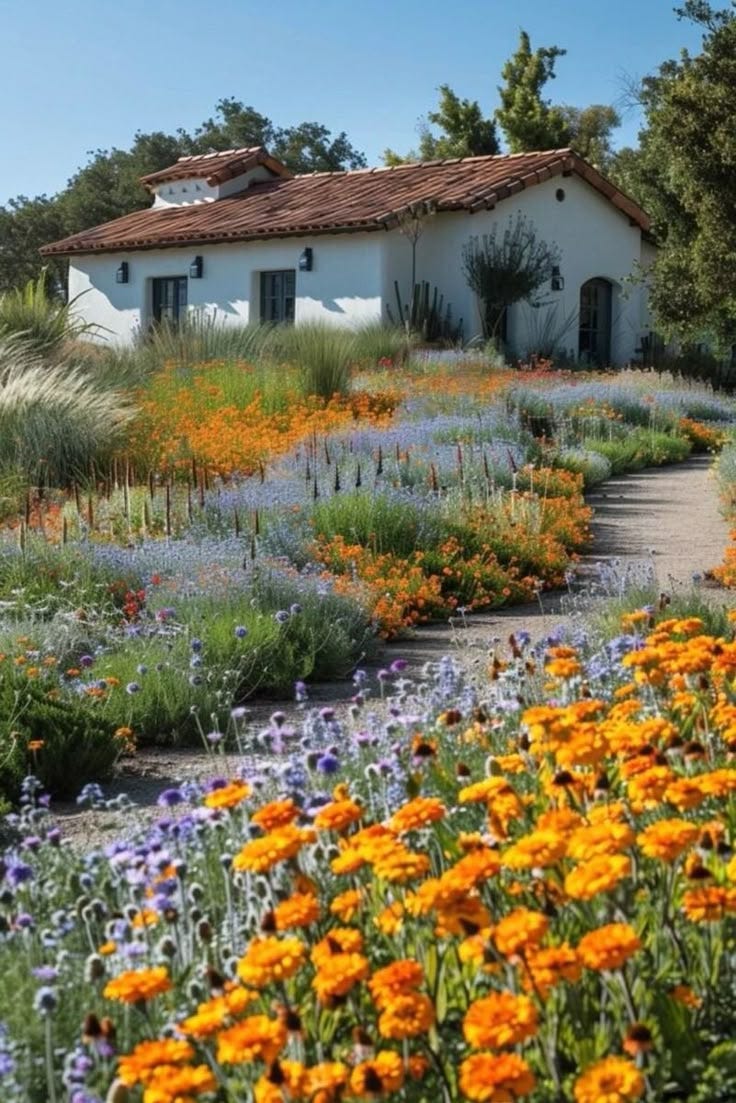
Those that live in suburban or rural areas can work towards improving the continuity of ecosystems across these environments, as well. On the micro, people can plant native flora and avoid the use of toxic pesticides to make their yards wildlife-friendly. They can support wildlife organizations that protect and rehabilitate animals impacted by urban sprawl. And on the macro, they can get involved with their local legislators.
Local legislators set the standards on which new residential or commercial development projects are approved. In California, for example, any new residential builds must include solar panels since 2020. These decisions can have long-lasting impacts on local land and water sources.
Sustainable living is possible no matter where we live. However, systemic change is needed to avoid the worst effects of the climate crisis. That means rethinking the way we design our cities, our suburbs, and even our rural areas. We must even forget old binaries that no longer serve us, such as the urban-rural divide, and seek to strengthen what connects us to the natural world and each other.